
 By Maxmulsoft
2026-07-06 09:54:53
Comments
(0)
345
By Maxmulsoft
2026-07-06 09:54:53
Comments
(0)
345
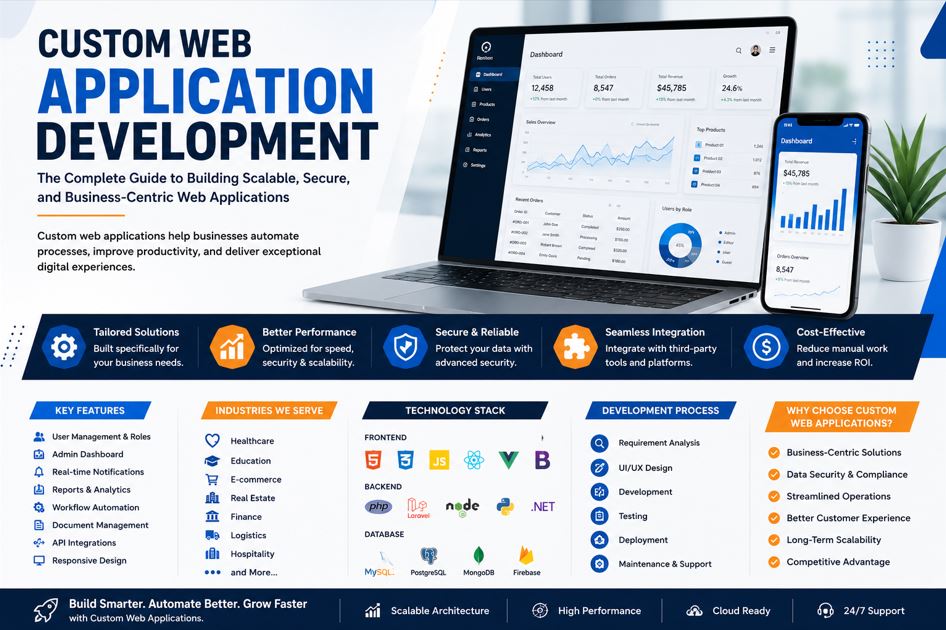
Custom Web Application Development: The Complete Guide to Building Scalable, Secure, and Business-Centric Web Applications
Introduction
In today's digital-first world, businesses require more than a standard website—they need intelligent, scalable, and customized web applications that streamline operations, improve customer experiences, and support business growth. Off-the-shelf software often falls short because every organization has unique workflows and operational needs.
Custom Web Application Development focuses on creating tailored web solutions that match your business processes, automate repetitive tasks, and integrate seamlessly with existing systems. Whether you are a startup, SME, enterprise, educational institution, healthcare provider, or e-commerce company, a custom web application can significantly improve productivity and efficiency.
This guide explains everything you need to know about custom web application development, from planning and technologies to deployment and future trends.
What is Custom Web Application Development?
Custom Web Application Development is the process of designing, developing, testing, and deploying web-based software tailored specifically to an organization's requirements. Unlike ready-made software, custom applications are built to solve unique business challenges and can be scaled as the business grows.
Examples include:
- Customer Relationship Management (CRM)
- Enterprise Resource Planning (ERP)
- Inventory Management Systems
- Hospital Management Systems
- School & University Portals
- HR Management Systems
- Online Booking Platforms
- Learning Management Systems (LMS)
- Project Management Software
- Multi-Vendor Marketplaces
- SaaS Platforms
- Billing & Accounting Software
Why Businesses Choose Custom Web Applications
Custom web applications provide businesses with complete control over their digital operations.
Key Benefits
- Tailored to your business requirements
- Highly scalable architecture
- Better performance
- Enhanced security
- Easy integration with existing software
- Automation of business processes
- Improved customer experience
- Cost-effective over the long term
- Centralized data management
- Competitive advantage
Essential Features of a Custom Web Application
1. User Authentication & Authorization
- Secure Login
- Registration
- Password Recovery
- Multi-Factor Authentication (MFA)
- Role-Based Access Control
2. Admin Dashboard
Administrators can manage:
- Users
- Products
- Orders
- Reports
- Permissions
- Settings
- Analytics
- Notifications
3. Responsive User Interface
The application should work seamlessly across:
- Desktop
- Laptop
- Tablet
- Smartphone
4. Real-Time Notifications
Support:
- Email Notifications
- SMS Alerts
- Push Notifications
- In-App Notifications
5. Reporting & Analytics
Generate reports for:
- Sales
- Revenue
- User Activity
- Inventory
- Performance
- Financial Data
- Business Insights
6. Workflow Automation
Automate repetitive tasks such as:
- Approvals
- Invoice Generation
- Order Processing
- Attendance
- Notifications
- Document Management
7. Document Management
- Upload Documents
- File Sharing
- Version Control
- Digital Storage
- Search & Filters
8. API Integration
Integrate with:
- Payment Gateways
- CRM Systems
- ERP Software
- Accounting Software
- Shipping Providers
- Google Services
- Third-Party APIs
9. Search & Filtering
Allow users to:
- Search records
- Filter data
- Sort information
- Export reports
10. Cloud Storage Integration
Compatible with:
- AWS S3
- Google Cloud Storage
- Microsoft Azure Storage
Industries That Benefit
Custom web applications are widely used in:
- Healthcare
- Education
- Banking & Finance
- Retail
- Manufacturing
- Logistics
- Hospitality
- Travel
- Real Estate
- Government
- NGOs
- Insurance
- E-commerce
Professional Services