
 By Maxmulsoft
2026-06-30 08:32:24
Comments
(0)
352
By Maxmulsoft
2026-06-30 08:32:24
Comments
(0)
352
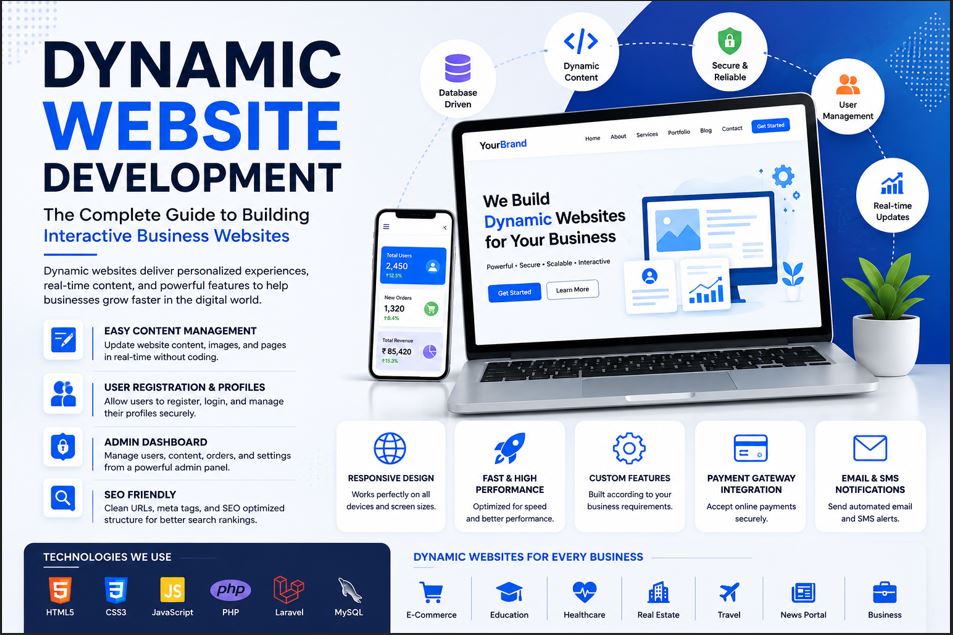
Dynamic Website Development: The Complete Guide to Building Interactive Business Websites
Dynamic Website Development: The Future of Interactive Business Websites
In today's digital-first world, businesses need more than just an online presence—they need websites that are interactive, intelligent, and capable of adapting to changing customer needs. A static website can display information, but it cannot provide personalized experiences, real-time updates, or advanced business functionality.
This is where Dynamic Website Development comes into play.
A dynamic website automatically generates content based on user interactions, database information, or administrator updates. Whether you're running an e-commerce store, educational platform, hospital management system, travel portal, or corporate website, dynamic websites offer flexibility, scalability, and a superior user experience.
What is Dynamic Website Development?
Dynamic website development is the process of building websites that generate content dynamically using databases and server-side programming languages.
Unlike static websites, dynamic websites allow administrators to update content without modifying the source code. They also provide personalized experiences for users through login systems, dashboards, search functionality, and real-time data.
Common examples include:
- E-commerce Websites
- School Management Portals
- Hospital Management Systems
- Real Estate Portals
- Travel Booking Websites
- Job Portals
- News Portals
- CRM & ERP Systems
- Membership Websites
- Online Learning Platforms
Why Businesses Need a Dynamic Website
A dynamic website enables businesses to:
- Update content instantly
- Manage products and services
- Accept online inquiries
- Handle customer accounts
- Process online payments
- Manage bookings
- Publish blogs and news
- Generate reports
- Integrate third-party services
- Improve customer engagement
Key Features of Dynamic Websites
Content Management System (CMS)
A CMS allows administrators to update website content without technical knowledge.
Benefits:
- Easy content editing
- Image management
- Blog publishing
- SEO management
- Media uploads
User Registration & Login
Provide secure access for customers, employees, students, or members.
Features include:
- User Authentication
- Password Recovery
- Profile Management
- Role-Based Access
- Account Dashboard
Database Integration
Dynamic websites store and retrieve information from databases.
Examples:
- Customer Data
- Product Catalogs
- Orders
- Appointments
- Reports
- User Profiles
Admin Dashboard
An admin panel helps manage every aspect of the website.
Functions include:
- User Management
- Product Management
- Order Tracking
- Content Updates
- Analytics
- Reports
- Settings
Responsive Design
Modern dynamic websites work seamlessly across:
- Desktop
- Laptop
- Tablet
- Mobile Devices
SEO-Friendly Structure
Dynamic websites can be optimized for search engines using:
- SEO-friendly URLs
- Meta Tags
- XML Sitemaps
- Structured Data
- Fast Loading Speed
- Image Optimization
Benefits of Dynamic Website Development
Better User Experience
Visitors receive personalized and interactive content based on their preferences.
Easy Content Updates
No coding knowledge is required to update products, services, blogs, or images.
Business Automation
Reduce manual work with:
- Online Forms
- Automated Emails
- Booking Systems
- Payment Processing
- Customer Notifications
Improved Security
Modern dynamic websites include:
- SSL Security
- User Authentication
- Data Encryption
- Secure Login
- Firewall Protection
- Backup Systems
Scalability
As your business grows, new modules and features can be added without rebuilding the website.