
 By Maxmulsoft
2026-07-04 12:34:27
Comments
(0)
306
By Maxmulsoft
2026-07-04 12:34:27
Comments
(0)
306
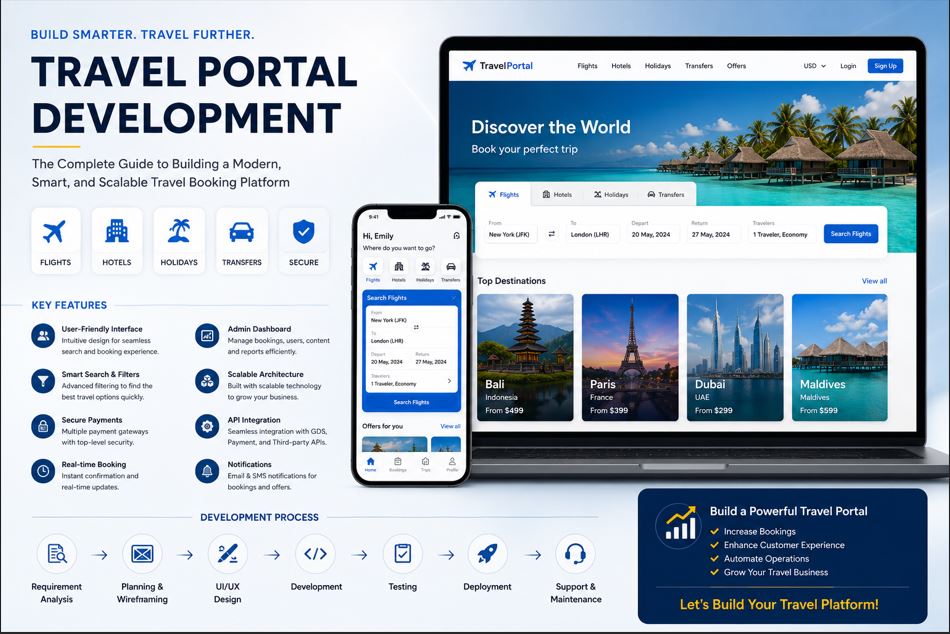
Travel Portal Development: The Complete Guide to Building a Modern, Smart, and Scalable Travel Booking Platform
Introduction
The travel industry has undergone a remarkable digital transformation over the past decade. Today, travelers expect to research destinations, compare prices, book flights, reserve hotels, purchase holiday packages, arrange transportation, and manage their itineraries—all from a single online platform. This shift has made travel portals an essential tool for travel agencies, tour operators, airlines, hotels, destination management companies, and tourism businesses looking to provide a seamless customer experience.
A travel portal is much more than a website. It is a comprehensive online booking platform that connects travelers with multiple travel services through an easy-to-use interface. A modern travel portal enables users to search for flights, hotels, buses, trains, holiday packages, travel insurance, car rentals, visa assistance, sightseeing activities, cruises, and other travel-related services in real time. By integrating with third-party APIs and secure payment gateways, travel portals provide instant availability, live pricing, and automated booking confirmations.
With the increasing popularity of online travel booking, customers expect fast-loading websites, mobile-friendly designs, secure payment options, personalized travel recommendations, and 24/7 accessibility. Businesses that invest in a professionally developed travel portal can improve customer satisfaction, automate business operations, reduce manual work, and significantly increase online bookings.
Modern travel portals also support advanced features such as AI-powered travel recommendations, dynamic pricing, multilingual interfaces, multi-currency support, customer dashboards, loyalty programs, promotional offers, travel reviews, itinerary management, and real-time booking notifications. These capabilities not only enhance the user experience but also help travel businesses stay competitive in an increasingly digital marketplace.
Whether you operate a travel agency, tour company, hotel booking service, airline reservation platform, corporate travel management company, or destination booking website, a professional travel portal helps establish credibility, streamline operations, and expand your business globally. It serves as a powerful digital platform that attracts customers, increases revenue, and delivers a convenient booking experience across desktop and mobile devices.
In this comprehensive guide, you'll learn everything about travel portal development, including its essential features, business advantages, technology stack, API integrations, security considerations, SEO strategies, and the latest trends shaping the future of online travel platforms.
Advantages of a Travel Portal
1. 24/7 Online Booking
Customers can search and book travel services anytime without depending on business hours.
2. Increased Business Revenue
Online booking systems help generate more reservations, upsell services, and reach a wider audience.
3. Automated Booking Management
Reduce manual work with automated booking confirmations, invoices, cancellations, and notifications.
4. Better Customer Experience
A user-friendly portal makes trip planning faster, easier, and more convenient.
5. Global Customer Reach
Travel portals allow businesses to attract customers from different cities and countries.
6. Real-Time Availability
Customers can instantly view available flights, hotels, buses, tours, and other travel services.
7. Secure Online Payments
Integrated payment gateways enable safe and convenient online transactions.
8. Mobile-Friendly Access
Responsive design allows travelers to book services from smartphones, tablets, and desktops.
9. Business Automation
Automate pricing updates, inventory management, booking status, and customer communication.
10. Improved Brand Credibility
A professional travel portal builds trust and strengthens your online presence.
Key Benefits of Travel Portal Development
Fast and Convenient Booking
Users can complete their entire travel planning process from one platform.
Centralized Travel Management
Manage flights, hotels, packages, customers, bookings, and payments through a single dashboard.
Multi-Service Integration
Offer multiple travel services from one website, increasing customer convenience and business opportunities.
Real-Time API Connectivity
Integrate with airline, hotel, bus, train, visa, insurance, and sightseeing providers for live data.
Multi-Currency Support
Accept bookings from international customers using different currencies.
Multi-Language Support
Provide localized experiences for users from different regions.
Personalized Recommendations
Recommend destinations, hotels, and packages based on user preferences and travel history.
Customer Dashboard
Allow users to manage bookings, payments, invoices, cancellations, and travel history.
Loyalty & Reward Programs
Encourage repeat customers with reward points, discounts, and exclusive offers.
Marketing & Promotions
Create coupon codes, seasonal offers, referral programs, and promotional campaigns.
Secure Data Protection
Protect customer information using SSL encryption, secure authentication, and data privacy practices.
SEO-Friendly Architecture
Improve search engine visibility and attract more organic traffic.
Scalability
Expand your portal as your business grows by adding new travel services and integrations.
Analytics & Reporting
Monitor bookings, revenue, customer behavior, and business performance through detailed reports.
Reduced Operational Costs
Automation minimizes manual tasks, helping reduce administrative expenses while improving efficiency.
Who Can Benefit from a Travel Portal?
- Travel Agencies
- Tour Operators
- Hotel Booking Companies
- Airline Booking Platforms
- Bus Ticket Booking Services
- Train Reservation Platforms
- Car Rental Companies
- Cruise Booking Agencies
- Adventure Tourism Companies
- Destination Management Companies (DMC)
- Corporate Travel Management Firms
- Visa Assistance Services
- Travel Startups
- Holiday Package Providers
Online Travel Agencies (OTA)
Conclusion
A professionally developed travel portal is more than just an online booking website—it is a complete digital ecosystem for managing travel services, improving customer satisfaction, and driving business growth. With features such as real-time bookings, secure payments, AI-powered recommendations, API integrations, mobile responsiveness, and automated workflows, a modern travel portal helps travel businesses stay competitive in today's fast-evolving tourism industry. Investing in a scalable, secure, and SEO-friendly travel portal is a strategic step toward expanding your reach, increasing bookings, and delivering exceptional travel experiences.