
 By Maxmulsoft
2026-06-29 11:45:37
Comments
(0)
379
By Maxmulsoft
2026-06-29 11:45:37
Comments
(0)
379
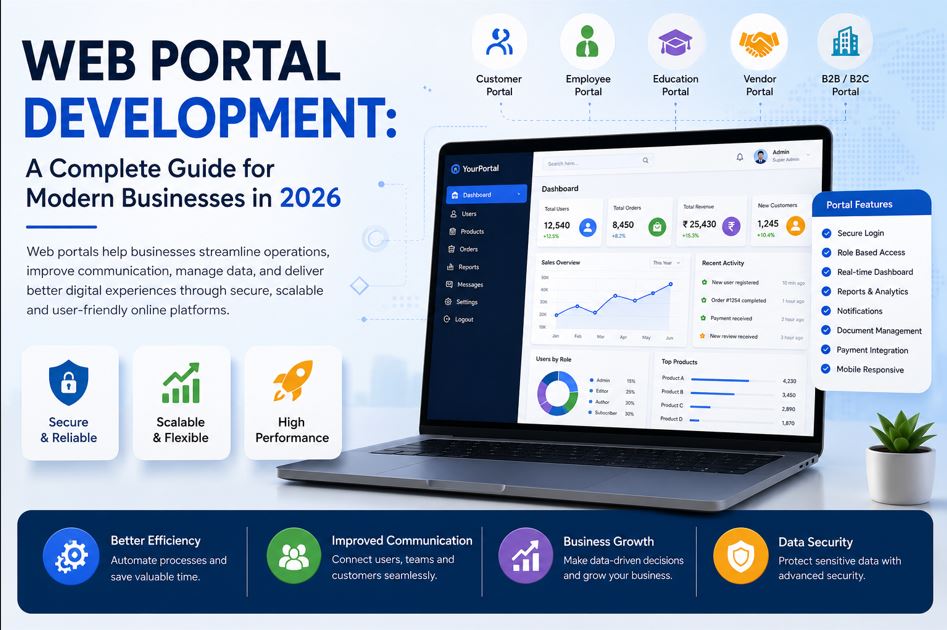
Web Portal Development: A Complete Guide for Modern Businesses in 2026
Introduction
In the modern digital world, businesses need powerful online platforms to manage communication, data, services, customers, employees, and operations from one place. A simple website is not always enough when a business needs login systems, dashboards, user management, reports, online payments, document sharing, and real-time communication.
This is where web portal development becomes important.
A web portal is a secure and interactive online platform that allows users to access personalized information, services, and tools based on their roles. Whether it is a customer portal, employee portal, vendor portal, education portal, healthcare portal, or business management portal, it helps organizations work faster, smarter, and more efficiently.
What is Web Portal Development?
Web portal development is the process of creating a customized online platform where different users can log in and access specific services, information, and features.
Unlike a regular website, a web portal is more dynamic and user-focused. It provides personalized dashboards, secure access, database connectivity, real-time updates, and automation features.
A web portal can be used by:
- Customers
- Employees
- Vendors
- Students
- Teachers
- Doctors
- Patients
- Admin Teams
- Business Owners
- Partners
Types of Web Portals
1. Customer Portal
A customer portal helps businesses provide better support and services to their customers.
Common features include:
- Customer Login
- Order Tracking
- Support Tickets
- Payment History
- Downloads
- Service Requests
- Notifications
2. Employee Portal
An employee portal helps companies manage internal communication and HR activities.
Features include:
- Attendance Management
- Leave Applications
- Payroll Details
- Company Announcements
- Task Management
- Documents
- Performance Reports
3. Education Portal
Education portals are useful for schools, colleges, coaching institutes, and online learning platforms.
Features include:
- Student Login
- Teacher Login
- Online Classes
- Assignments
- Attendance
- Fee Management
- Exam Results
- Study Materials
4. Vendor Portal
A vendor portal helps companies manage suppliers and business partners.
Features include:
- Vendor Registration
- Purchase Orders
- Invoice Management
- Payment Status
- Product Listings
- Communication Dashboard
5. B2B Portal
A B2B portal connects businesses with other businesses.
Features include:
- Bulk Ordering
- Pricing Management
- Partner Login
- Quotation Requests
- Inventory Updates
- Dealer Management
6. B2C Portal
A B2C portal helps businesses directly serve customers online.
Features include:
- User Registration
- Product Browsing
- Online Payments
- Order Management
- Customer Support
- Reviews & Ratings
Benefits of Web Portal Development
1. Centralized Information
A web portal stores all important business information in one place, making it easier to access and manage.
2. Better Communication
Portals improve communication between customers, employees, vendors, and admin teams through messages, notifications, and support systems.
3. Process Automation
Manual work can be reduced through automation features like:
- Online forms
- Auto-generated reports
- Payment reminders
- Email notifications
- Task assignment
- Approval workflows
4. Secure Data Access
Web portals provide role-based access, allowing users to see only the information relevant to them.
Security features include:
- User authentication
- Role-based permissions
- Data encryption
- Secure login
- Activity tracking
5. Improved Customer Experience
Customers can access services anytime without waiting for manual support.
This improves:
- Customer satisfaction
- Response time
- Service quality
- Brand trust
6. Better Business Efficiency
By reducing repetitive tasks and centralizing operations, web portals help businesses save time and improve productivity.